
Best Deserts In Europe
Europe is renowned for its cultural landmarks and lush landscapes, but it also has some unique desert-like terrain that is well worth exploring. From the Bardenas Reales in Spain to the sand dunes of the Curonian Spit in Lithuania, these environments offer a different side to Europe.
Given the rarity of deserts in Europe, you may be unfamiliar with what each location has to offer. Keep in mind that some locations are protected natural reserves and may have restrictions on what you can do there.
Unlike the vast deserts of Africa or America, European desert terrains are typically smaller but offer their own unique characteristics. They are easier to access and generally less extreme in terms of temperature and conditions, but they are generally open and free to explore.
Whether you’re a geography enthusiast, a photographer seeking unique landscapes, or a family keen on an otherworldly excursion, this curated list of must-see deserts in Europe has something to offer everyone. From the most accessible to the truly remote, let’s explore the deserts of Europe, where you can find them, and what you can do there.
Tabernas Desert, Spain

The Tabernas Desert is located in Almería, southeastern Spain. Covering an area of about 280 square kilometers (108 square miles), it is one of the most arid deserts in Europe.
The desert’s formation was caused by its isolated position between the Sierra de los Filabres and Sierra de Alhamilla mountain ranges, creating a rain shadow effect that prevents moisture from reaching the area.
The soil is mostly sandy, and it takes on a reddish hue under the strong sun. The desert has some wildlife, including foxes, rabbits, hares, hedgehogs, and dormice, while the lizard colirrojo is indigenous to the area.
The desert has some unique formations, including the “Four Doors,” a cave-like structure carved naturally into the rock, and has been a popular location for shooting films, particularly Westerns, due to its rugged, unspoiled landscape.
Some of the best things to do in the desert include visiting Oasys MiniHollywood, an authentic-looking cowboy settlement, along with its animal reserve and water park, perfect for families with kids or if you like exploring old film sets.
The Bardenas Reales, Spain
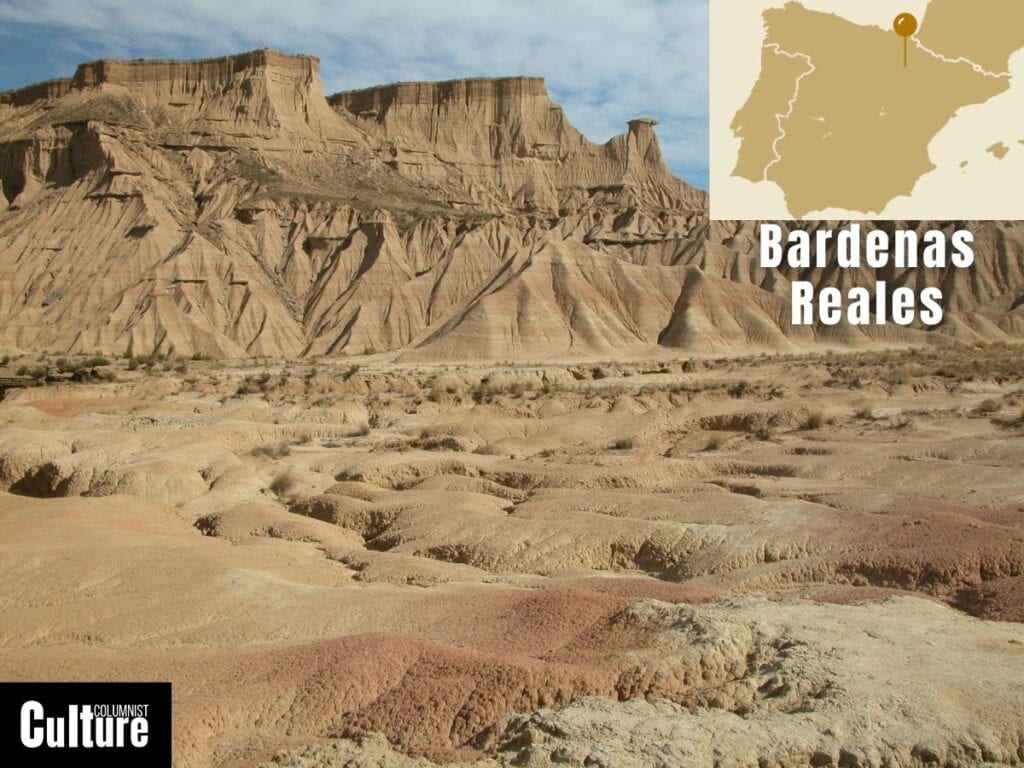
Las Bardenas Reales is a semi-arid natural region situated in southeast Navarre, Spain. It covers over 100,000 acres and is recognized as a UNESCO Biosphere Reserve.
This semi-desert landscape is a mix of plains, ravines, and hills rising up to 600 meters (656 yards), sculpted by rainfall over its plaster and clay terrains. Erosion has created distinctive geological structures and rock formations that have been the backdrop for several films and TV series, with the most iconic being Castildetierra.
The desert comprises three distinct landscapes: El Plano, an elevated plateau rising up to 100 meters (109 yards) above adjacent areas; La Bardena Blanca, the most desert-like section with wide flat areas and winding ravines characterized by a white hue, giving it it’s name; and La Bardena Negra, an area of cereal fields bordered by kermes oak and pinewood forests.
Bardenas Reales is perfect for road trips; you can explore the desert by bike, car, or bicycle. The main tourist route is a 34-kilometer (21-mile) loop that starts at the Visitor’s Information Center and takes you past the desert’s most unique attractions and must-see areas.
Désert de Monegros, Spain
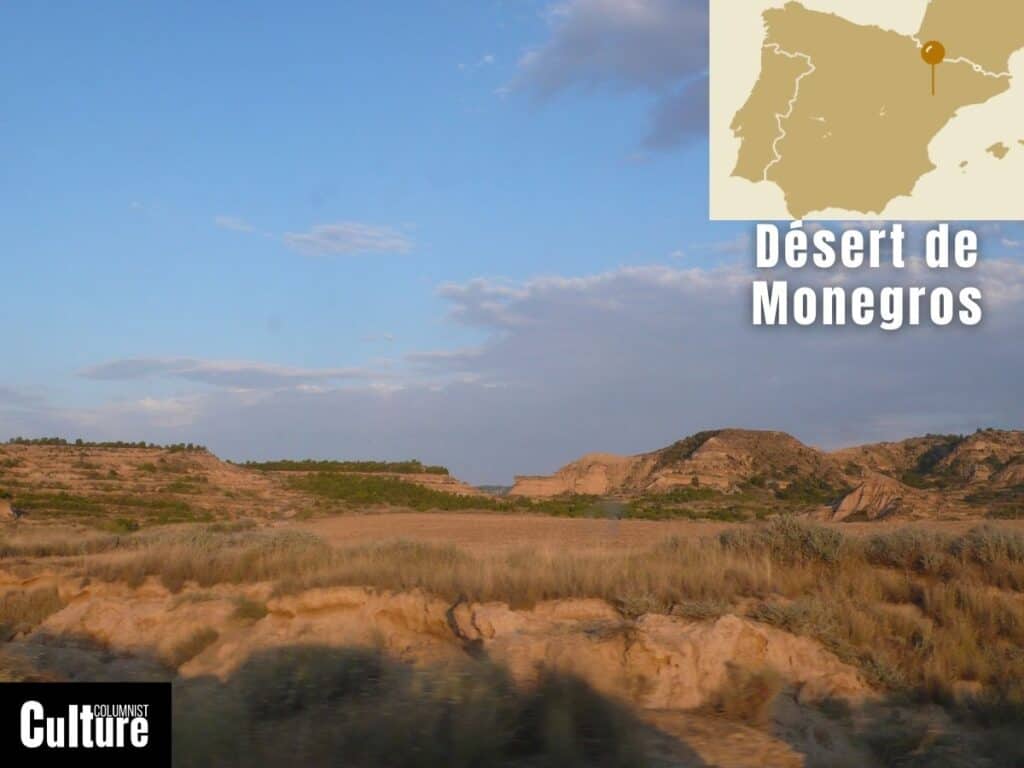
The Désert de Monegros is located in northeastern Spain, primarily encompassing the province of Aragón. Spanning approximately 2,700 square kilometers (1,042 square miles), it is one of Europe’s most arid regions.
The Monegros Desert is a unique blend of steppe landscapes and barren badlands. It’s dominated by sandstone and clay rock formations dotted around the ravines, plateaus, and rolling hills.
Despite its arid environment, it hosts a unique range of biodiversity, including several types of shrubs like salt cedar and thyme, while migratory birds often visit the saltwater lagoons dotting the landscape.
Located at one of the south-west entrances of the desert, the area is home to curious sandy structures, the most famous of which is the Tozal de la Cobeta, a giant free-standing rock formation that makes for a unique photo opportunity.
The desert is often explored by mountain bikers and hikers who are looking to feel immersed in the wilderness. The Tozales of Monegros are a must-see for any visitor to the area.
Accona Desert, Italy
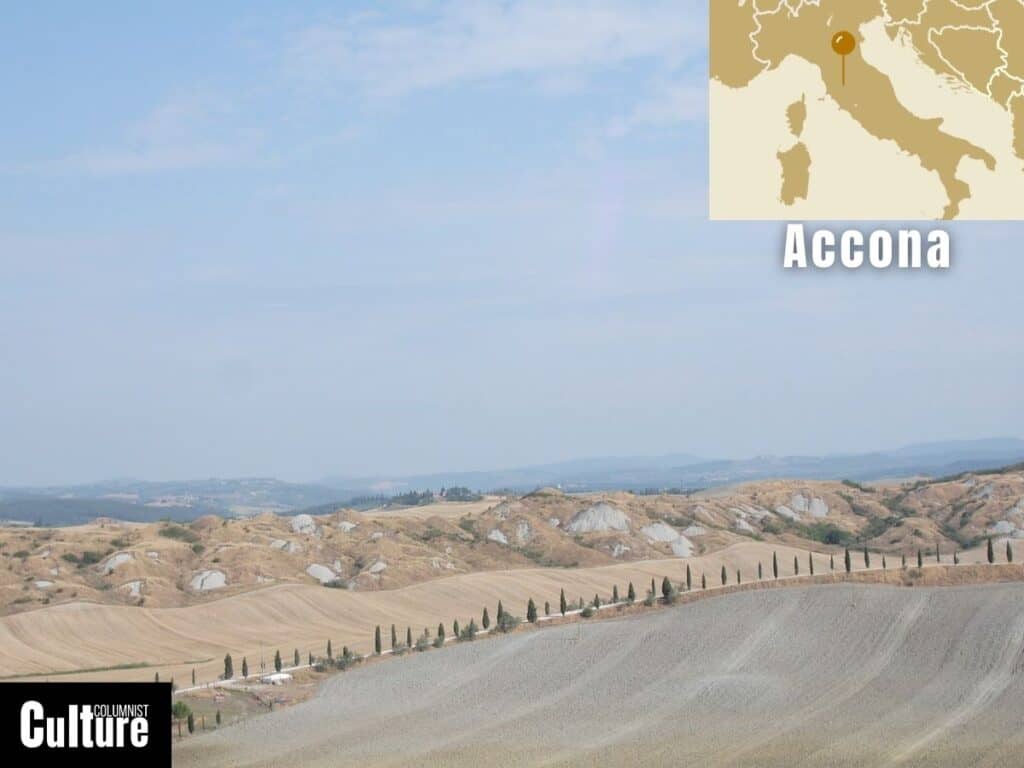
The Accona Desert is located in the Crete Senesi area, south of Siena, in the region of Tuscany, Italy. While not officially recognized as a desert, it has a number of semi-arid conditions that are rare in Europe.
The Accona Desert is characterized by barren clay hills and dunes known as “biancane,” which are small white mounds formed by the erosive action of wind and rain. These hills create a stark contrast with the surrounding greenery of Tuscany, giving the landscape an otherworldly appearance.
The area is also known for its natural thermal springs, proving a unique way to unwind after a day of exploring. While there are no famous sites directly linked to the Accona Desert, the nearby Abbey of Monte Oliveto Maggiore is a historical and architectural landmark worth visiting.
The Accona Desert is perfect for those seeking to pair adventure with a bit of indulgence. You can explore the lunar-like landscapes of the desert by walking along the recently opened “Le Biancane di Leonina” nature trail and toasting to your adventures with Tuscany’s world-class wines by night, making it perfect for girls trips and romantic getaways.
Błędów Desert, Poland
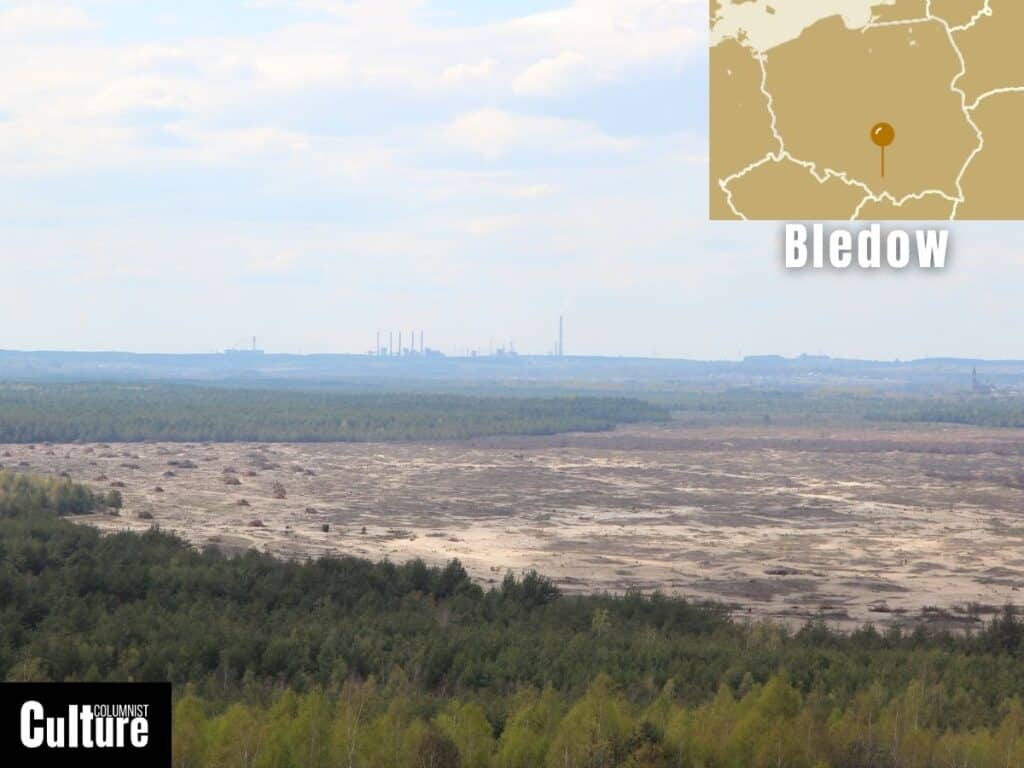
The Błędów Desert, located in southern Poland between the cities of Krakow and Katowice, is often referred to as the “Polish Sahara.” Though not a natural desert, its sandy landscape covers approximately 32 square kilometers (12 square miles).
This European anomaly offers a landscape of sand dunes, some reaching heights of up to 30 meters, and scant vegetation primarily consisting of grasses and shrubs. The desert floor varies in color from lighter hues to darker, reddish tints due to varying mineral content.
While not as large as natural deserts, its barren expanses are nonetheless captivating and offer a unique hiking or off-road experience in a European setting. Historically, it was used as a training ground for the Afrika Korps during World War II and has since been a site for various military exercises.
While the Błędów Desert doesn’t offer particularly much to do, it’s worth a visit if you are curious about nature and enjoy large open spaces. It has several marked educational trails, picnic areas, and observation towers to give you a better perspective of the landscape.
Siedlec Desert, Poland
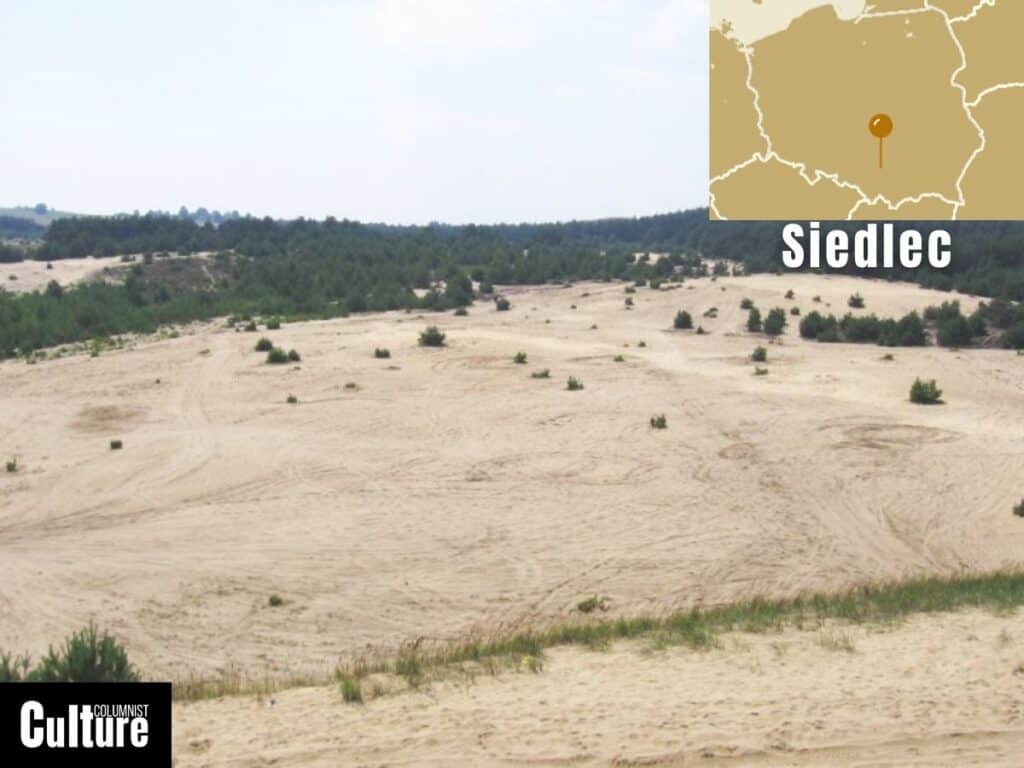
The Siedlec Desert is located in the Lesser Poland Voivodeship in the southern part of Poland. Although it is not a desert in the geological sense, its sandy landscape, covering approximately 34 hectares, resembles desert-like conditions.
The area initially served as a sand mine, and the continuous excavation of sand resulted in the unique landscape seen today.The desert-like area is composed mainly of loose, fine sand, which can be whipped into dunes by strong winds.
The barren landscape is sometimes interrupted by hardy shrubs and grey-hair grass. The sandy landscape has even served as a training ground for Polish soldiers preparing for deployments to arid regions.
While not an official desert, the Siedlec area offers a glimpse into desert-like conditions to those who want a desert experience without having to venture outside of Europe. The main tourist attractions are the high dunes, reaching up to 30 meters (33 yards) in height, and on hot days, you can even see the phenomenon of mirages in the hot air.
Kozłow Desert, Poland
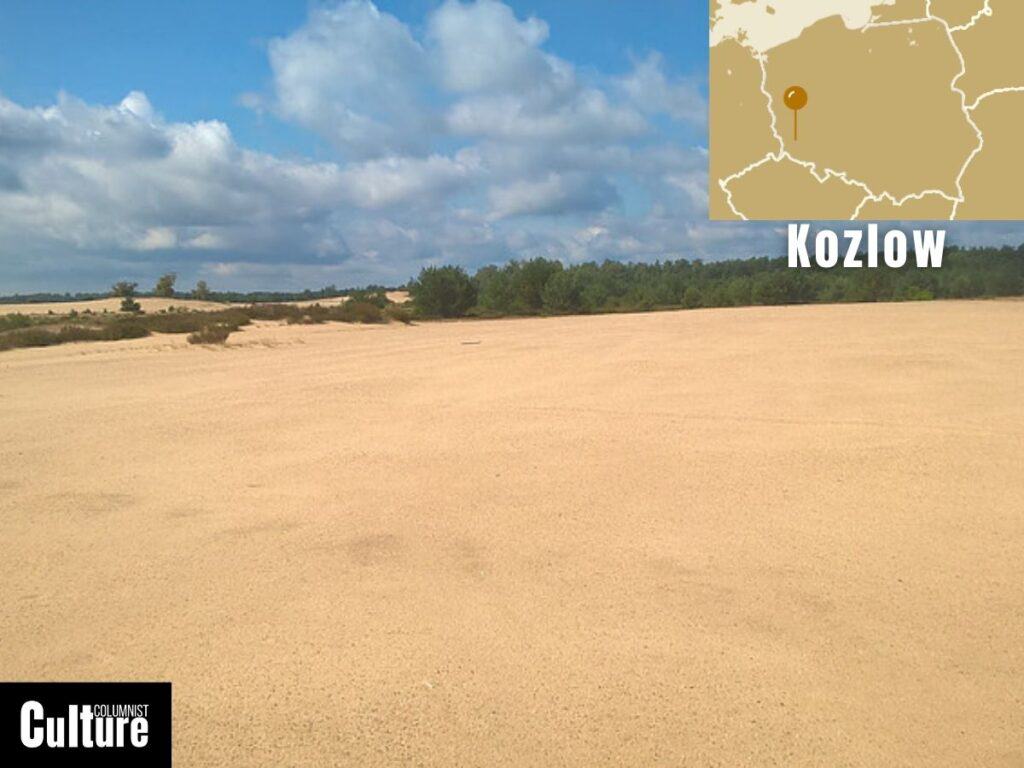
The Kozłow Desert, also known as the Kozłowskie Desert, is situated in southern Poland near the town of Kozłów. Unlike other natural deserts, the Kozłow Desert’s formation is a result of deforestation and the extraction of sand for industrial purposes.
This man-made desert spans approximately 30 hectares, making it one of the smaller desert-like landscapes in Europe. It has become a local site for off-road motor sports and even small-scale film productions.
The landscape of the Kozłow Desert is characterized by its undulating sand dunes and surrounding forests. The desert sands have a lighter hue and are soft and deep enough to leave tracks and imprints just like a real desert.
The Kozłow Desert is great for those who want to explore a mixture of different landscapes all in one place. From the sandy plains of the desert to the tall pine trees of the massive forests surrounding the desert and the pink and purple heathlands of the Przemkowski Landscape Park, Kozłow Desert offers a diverse range of natural landscapes to explore for a day trip or a family excursion.
Pachies Ammoudies Desert, Greece

The Pachies Ammoudies Desert, commonly known as the Lemnos Desert, is located on the island of Lemnos in the northeastern Aegean Sea, Greece. While it’s not officially recognized by any major accolade like UNESCO, this desert-like region is a unique geological phenomenon in Europe.
The desert features remarkable sand dunes, which can reach heights of up to 10 meters. The sands of Pachies Ammoudies are exceptionally fine, and their colors range from golden to reddish hues.
The landscape is fairly devoid of plant life, although olive and pear trees can be found near the edges. There are no significant historical or archaeological sites within the desert itself, but its otherworldly appearance has attracted filmmakers, photographers, and tourists alike looking for a desert backdrop without leaving Europe.
The desert is open to the public, and you are free to walk around the area. Pachies Ammoudies Desert is only a 10-minute drive from Gomati Beach and is perfect for anyone who is looking to combine a bit of adventure with a seaside getaway.
The Ryn Desert, Russia
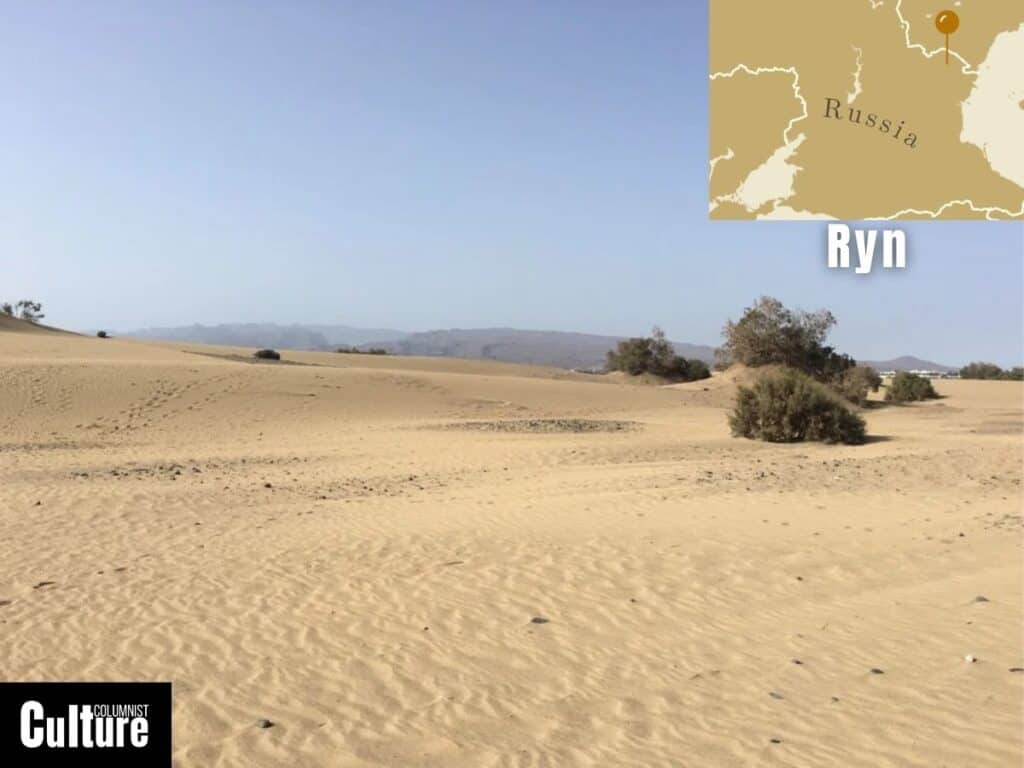
The Ryn Desert, also known as the Ryn-Peski, is located in the Volgograd region of southern Russia. This area is not a “true desert” due to its climate, but it possesses a desert-like landscape and is one of the northernmost desert areas in the world.
The Ryn Desert is characterized by sandy terrain mixed with salt marshes, and it features a variety of dunes—some reaching up to 25 meters (27 yards) in height. The desert’s distinct look is dominated by white and yellow hues, due to the combination of sand and salt on the ground.
Due to its isolation and low population, it doesn’t have as many famous historical or archaeological sites compared to other European deserts. However, due to its remote and hard-to-reach location, this desert is for the most adventurous trekkers who are searching for something that is completely off the beaten track. It’s also advisable to check with your consulate before traveling inside Russia.
Oleshky Desert, Ukraine
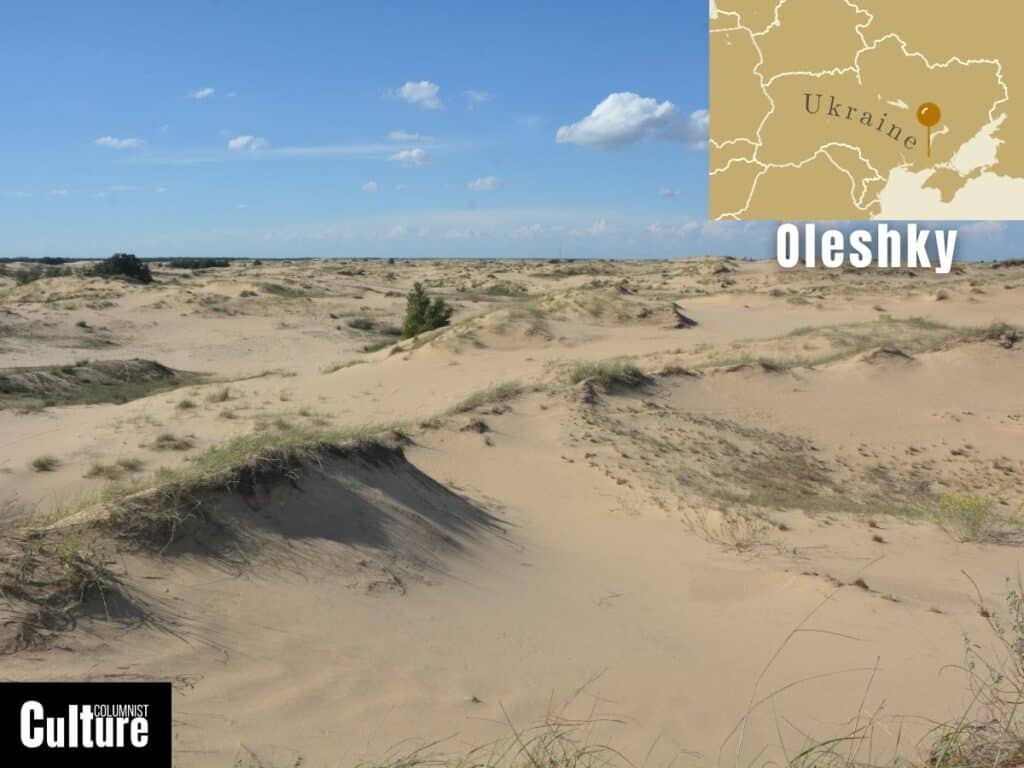
The Oleshky Desert is located near the city of Kherson in southern Ukraine, and while it is no longer possible to visit the desert due to the war in Ukraine, it is still the largest desert in Europe.
Although technically a “sand field” rather than a true desert, the area’s sandy characteristics are a result of the region’s proximity to the Dnieper River, whose waters have historically washed sand onto the landscape.
Oleshky is distinguished by its large, rolling sand dunes, some of which rise up to 5 meters (5.4 yards) high. Contrary to what its name might suggest, the “desert” is not entirely barren. It is interspersed with patches of vegetation like shrubs, reeds, and occasional trees, specifically pines planted in efforts to halt the spread of the sands.
FAQ
Lorem ipsum dolor sit amet, consectetur adipiscing elit. Ut elit tellus, luctus nec ullamcorper mattis, pulvinar dapibus leo.